
Review · ITALY
Genoa: Pelagos Sanctuary Whale Watching Cruise
Wild whales are worth waiting for. This four-hour cruise from Genoa reaches the deep waters of the Pelagos Sanctuary, where dolphins, sperm whales, fin whales, and Cuvier’s beaked whales may surface. I like the biologist-led search, which gives the trip more purpose than a simple boat ride, and I like the crew’s patient, wildlife-sensitive approach. The main drawback is clear: you may spend much of the afternoon watching empty water before anything appears.
The cruise costs about $51 per person, which is fair if you want a serious attempt at seeing marine life rather than a quick harbor outing. I also appreciate the free return excursion offered within one year if you see no cetaceans at all. Still, calm weather matters, the boat can be busy, and the long time at sea may test anyone prone to seasickness.
Key points to know before you go
- The search begins in deep water: After roughly 30 minutes, the boat reaches areas about 1,000 to 1,500 meters deep, where sightings are more likely.
- Wildlife is never guaranteed: The crew searches patiently, but there are no fixed meeting points or set times for animals to appear.
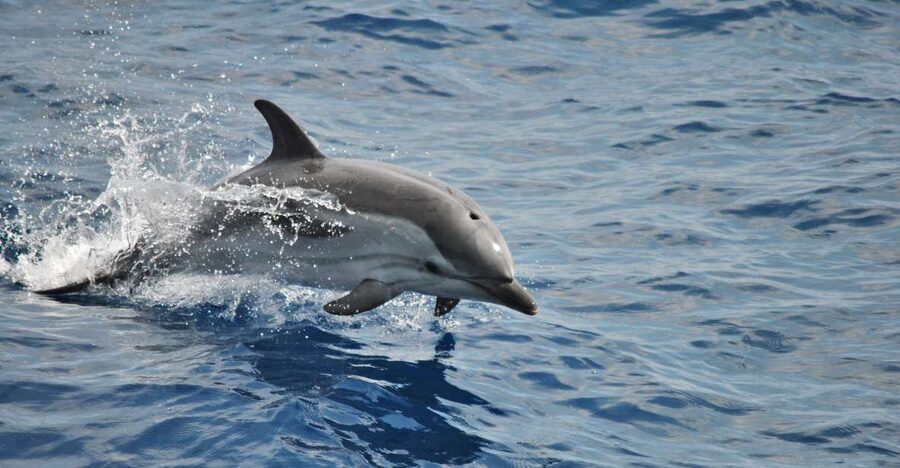
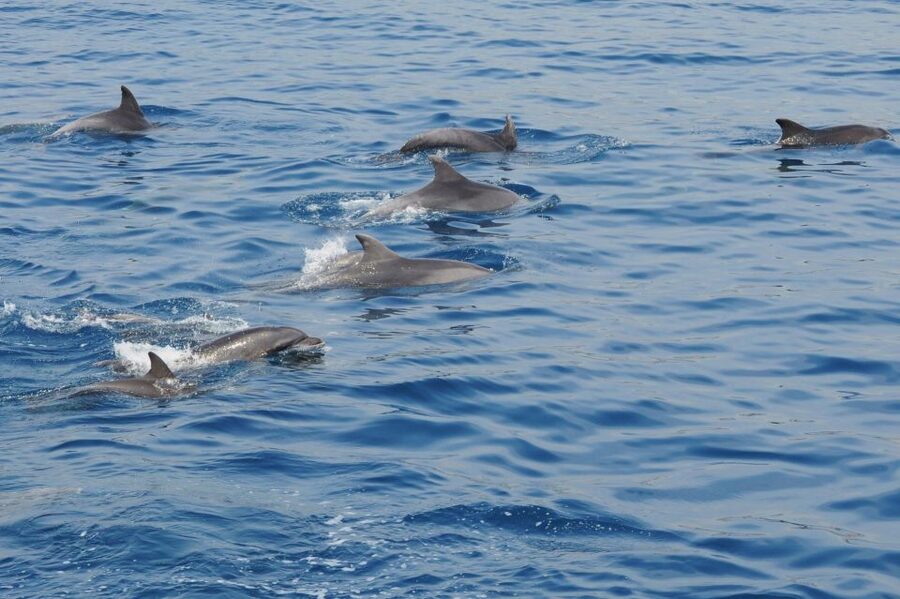
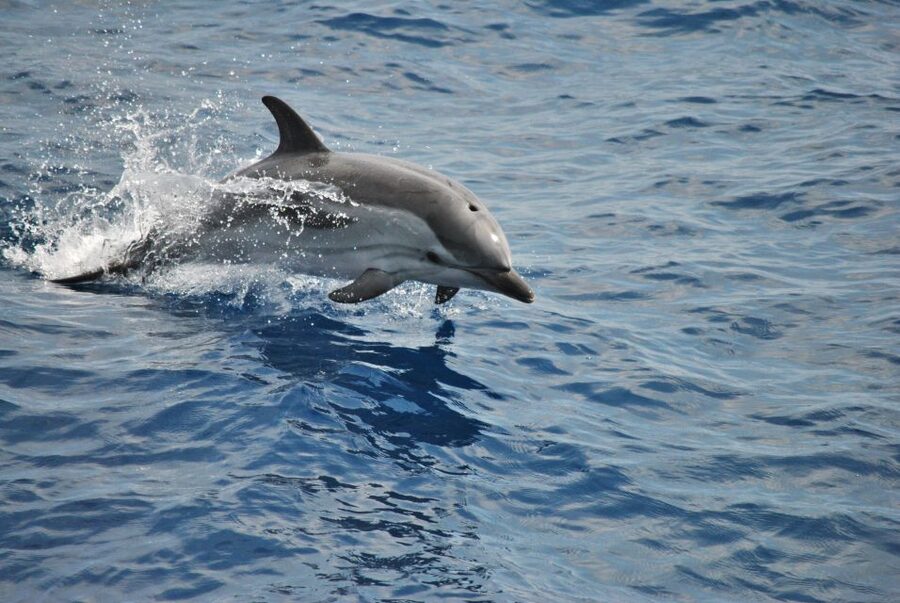
- Dolphins are a strong possibility: Past outings have included large pods of striped dolphins, sometimes more than 25 animals at once.
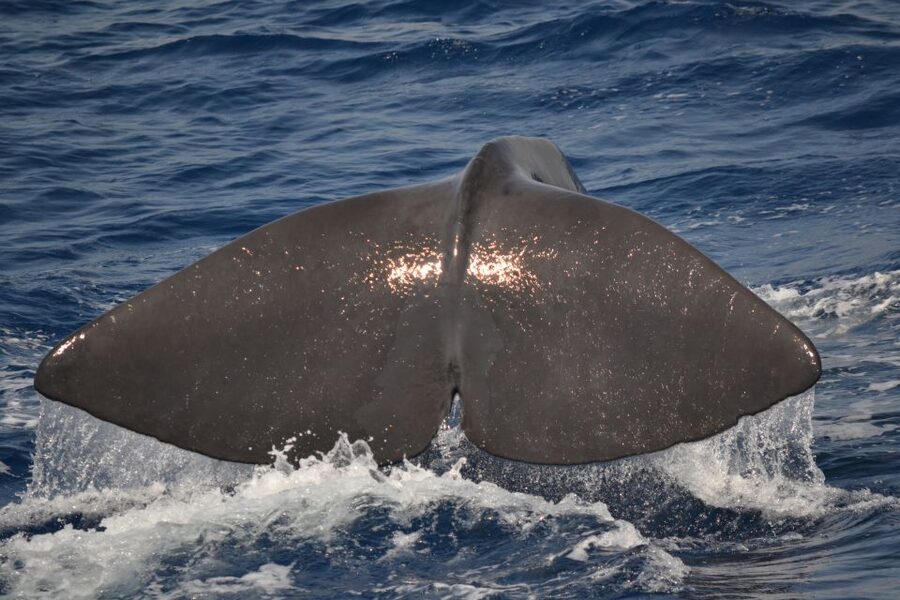
- Rare whales do appear: Sightings have included sperm whales, fin whales, minke whales, and Cuvier’s beaked whales.
- Calm weather helps: Smooth seas and little wind make it easier to spot animals as they surface.
- The boat is practical, not intimate: It has toilets and drinks for sale, but one account describes a full boat with limited chances for extended one-to-one conversation.
Starting at Calata Mandraccio in Genoa’s Porto Antico
The meeting point is in Genoa’s Porto Antico, at Calata Mandraccio. Look for the area near the Bigo, the port’s familiar steel viewing structure, and the Genoa Coast Guard patrol boats.
This is a convenient part of the city for a half-day outing. You are not heading to a distant marina or an isolated waterfront. The cruise leaves at 1 p.m., so you can spend the morning visiting Genoa’s old harbor area, eating lunch, and then walk to the boat.
Allow enough time to find the exact boarding point. Porto Antico contains several piers and attractions, and Calata Mandraccio is more specific than simply saying the harbor. If you are meeting a group, confirm that everyone knows the location near the Bigo and Coast Guard boats.
The excursion runs on Sundays in April, May, and October. From June through September, departures are scheduled on Wednesdays, Fridays, and Sundays. The seasonal schedule reflects the practical side of sea travel: the company operates mainly from April to October because conditions are generally better.
More whale watching trips in Italy:
- Aquarium of Genoa Ticket and Whale Watching Cruise
★ 4.2 · 170 reviews
The first 30 minutes: leaving the harbor behind
The first part of the cruise is a gradual change of scene. Genoa’s waterfront gives way to open water, and after about half an hour the boat reaches the area where the search really begins.
Do not expect whales immediately after leaving the pier. The early sailing time is mainly transport toward deeper water. This is useful to understand before you go because the trip is not a sightseeing cruise that stays close to the city. The goal is to reach the marine zone where large animals are more likely to pass.
Once offshore, the crew begins scanning the surface. The guides use binoculars and watch for blows, fins, movement, and groups of birds or dolphins. One recent outing had three spotters looking continuously, which gives you a sense of how much attention goes into finding animals that may surface only briefly.
The open sea also brings the main physical challenge. On a calm day, the ride can feel peaceful and spacious. In wind or rolling water, you may feel the motion more strongly, especially during the slower search periods.
Searching the Pelagos Sanctuary at 1,000 to 1,500 meters
The boat heads to waters roughly 1,000 to 1,500 meters deep. That depth is important because the sanctuary supports species that spend much of their time far below the surface.
The crew does not know exactly where an animal will appear. The search is based on patient observation rather than a guaranteed route. You may stop or slow down while everyone looks across the water, then move again when the crew spots activity in the distance.
This is where the experience differs from a standard sightseeing cruise. There can be long stretches with little to see, but the quiet has a purpose. You are waiting for wild animals, not visiting a controlled exhibit. When a dolphin pod suddenly appears beside the boat, the contrast makes the sighting more powerful.
A biologist guides each trip and explains animal behavior in English and Italian. A German or English-speaking guide may also be available if requested. The guide is there to answer questions and explain what you are seeing, rather than simply point toward the horizon.
English explanations have occasionally been difficult for some passengers to follow, especially when information is translated quickly. If the group is multilingual, stand where you can hear clearly and ask for an explanation to be repeated when needed.
What you might see from the boat
Dolphins are often the most active part of the trip. Striped dolphins have appeared in groups, with some outings seeing two separate pods and others finding five pods. Large groups can move quickly around the boat, sometimes racing alongside it or passing underneath.
That kind of encounter is usually easier to appreciate than a distant whale blow. Dolphins may remain visible for several minutes, giving you more chances to watch their movement. One outing recorded groups larger than 25 animals, while another included mothers with calves.
Whales are less predictable, but the range of possible species is impressive:
- Sperm whales
- Fin whales
- Minke whales
- Cuvier’s beaked whales
- Pilot whales
Cuvier’s beaked whales are particularly special. They spend much of their time below the surface and are rarely seen by chance. One outing found several of them, and the biologist explained that the group had been unusually fortunate.
Other sightings have included loggerhead turtles, sea turtles, and seabirds. This matters because a whale-watching trip should not be judged only by the biggest animal. The open water can offer several smaller encounters that make the afternoon worthwhile even if no whale appears.
A few more boat trips in Italy worth a look
- Boat Trip: Glimpse of Murano, Torcello & Burano Islands
★ 4.3 · 15,699 reviews - Murano & Burano: Boat Tour with Guide & Glass Factory Visit
★ 4.3 · 10,716 reviews - Venice: Burano, Torcello & Murano Boat Tour w/Glassblowing
★ 4.4 · 10,245 reviews - Murano & Burano Islands Guided Small-Group Tour by Private Boat
★ 4.5 · 7,580 reviews
The best and worst part: waiting
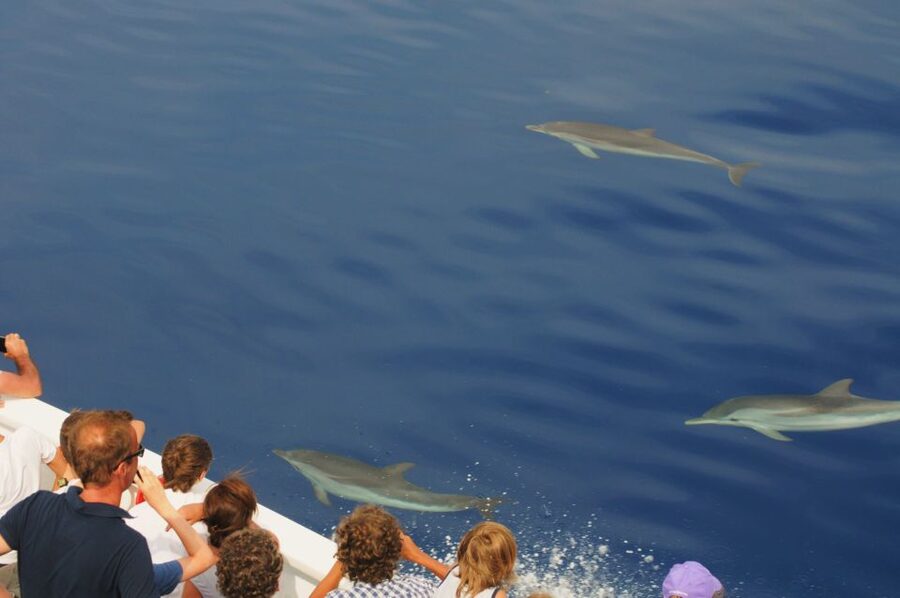
The cruise requires patience. You may watch the same stretch of water for quite a while, then suddenly hear an alert from the crew and see the boat change direction.
That waiting can feel slow if you expect a steady stream of wildlife. One outing took almost an hour to produce its first sightings. Another had plenty of dolphins but no whales. The company is honest about this uncertainty, and the crew’s work depends on conditions, luck, and animal behavior.
I like the fact that the boat is not described as chasing wildlife aggressively. The captain has been praised for keeping a respectful distance, and the crew’s aim is to reach animals before they disappear rather than force them to remain near the boat.
The best conditions are calm seas and little wind. When the surface is smooth, you can spot a blow or fin more easily. Wind creates whitecaps that can hide small movements and makes the boat less comfortable.
The months just before the busiest summer period, especially April, May, and October, may offer a quieter sea with less shipping traffic. Sightings can occur throughout the operating season, but quieter water and lighter traffic may make the search more pleasant.
A four-hour outing with practical comforts
The full excursion lasts about four hours. That includes the trip from Porto Antico to the deep-water search area, the wildlife search, and the return to Genoa.
The boat has toilets, and drinks can be purchased onboard. Those details matter because four hours is long enough for basic comfort to become important. Bring water anyway, especially if you are sensitive to heat or motion.
The boat has been described as clean and comfortable, but it can also be full. One account specifically wished for a smaller group and more time to speak directly with the marine biologist. If you want a quiet private outing, this is not the right format.
For the best view, pay attention when the crew begins scanning or announces an animal. You may need to move your gaze quickly from one side of the boat to the other. The most exciting sightings can last only a short time, and everyone will want a clear look.
A camera with a strong zoom may help, but do not let equipment distract you from watching. Fast-moving dolphins and distant whale blows are difficult to photograph, especially from a moving boat.
Seasickness, accessibility, and timing concerns
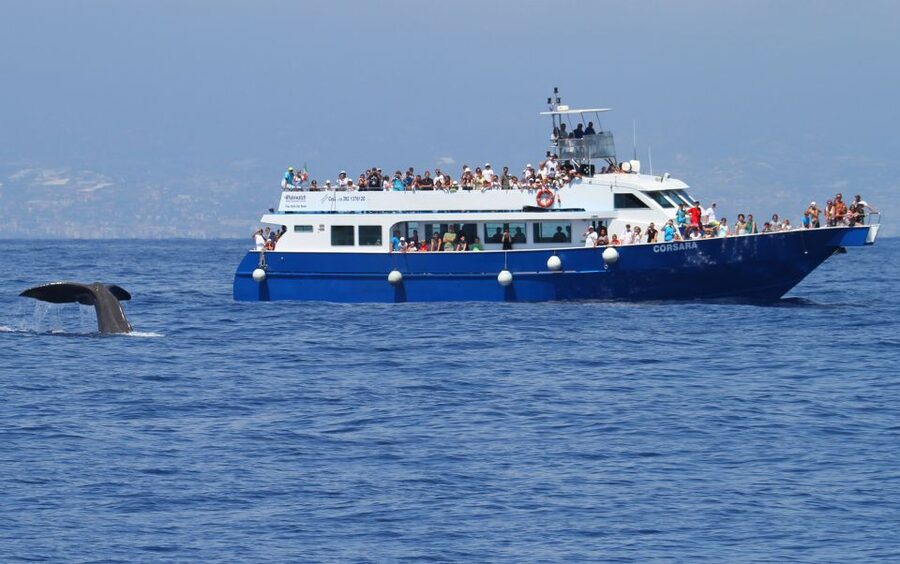
You should prepare for motion even if you normally feel fine on boats. One passenger became seasick near the end, partly because the vessel was drifting during the search. Personal seasickness precautions are sensible for anyone who knows they are sensitive.
The activity is not suitable for people with mobility impairments. The provided information does not describe step-free access or special boarding arrangements, so ask the operator directly if you have a specific mobility concern.
The four-hour duration can also affect your later plans. One outing ran longer after the crew located a whale, causing a passenger to miss a train. The company offered help with the next train, but you should still avoid booking a tight connection afterward.
I would leave a generous buffer before any train, dinner reservation, or evening activity. Wildlife does not follow a timetable, and the crew may continue when conditions offer a worthwhile chance to see animals.
Is $51 a fair price?
At around $51 per person, I consider this good value for a four-hour open-sea excursion with a biologist guide. You are paying for a serious search in the sanctuary, not a guaranteed performance.
The value is strongest when you care about the whole experience: the open sea, the explanations, the possibility of several species, and the chance to see animals behaving naturally. Several outings have included both dolphins and whales, while others produced dolphins, turtles, and seabirds without a whale.
The free second excursion within one year if no cetaceans are seen makes the risk easier to accept. You need to contact the provider and arrange the extra booking, so it is not an automatic return trip. Still, this policy shows that the company recognizes the uncertainty of the activity.
Free cancellation up to 24 hours before departure and the option to reserve now and pay later also make planning easier. These policies are useful, but they do not change the central fact: you are buying a chance to see wildlife, not a guaranteed sighting.
Who will enjoy this cruise most?
I would recommend it to you if you like marine life, photography, natural science, or simply being out on open water. Families can enjoy it, provided children can handle a four-hour boat ride and understand that waiting is part of the activity.
It is also a good fit for anyone who wants a different side of Genoa. The city is famous for its port and historic center, but this cruise shows the waters beyond the waterfront.
You may want to skip it if you need a tightly timed afternoon, dislike boat motion, or expect constant action. It is also a poor match if you want a small, private group with plenty of personal conversation with the guide.
For most people, the ideal day is sunny, calm, and free of later commitments. Those conditions give you the best chance of seeing animals and enjoying the journey even during quiet periods.
Should you book the Pelagos Sanctuary cruise?
Yes, if you accept the rules of wildlife watching. The strongest parts are the patient biologist-led search, the range of possible species, and the chance to see large dolphin pods or rare beaked whales in their natural setting.
Book it when the sea forecast looks calm, take precautions against seasickness, and keep your evening schedule flexible. I would especially consider April, May, or October if you prefer less shipping traffic, while summer offers more departure dates.
Do not book this expecting a guaranteed whale sighting. Book it because the search itself has value, and because a calm afternoon may bring dolphins, turtles, seabirds, and perhaps one of the sanctuary’s remarkable whales. At $51, that is a fair gamble, with a free second chance if the sea gives you nothing at all.
FAQ
Where does the whale watching cruise leave from?
The boat leaves from Calata Mandraccio in Genoa’s Porto Antico, near the Bigo and the Genoa Coast Guard patrol boats.
How long does the cruise last?
The excursion lasts about four hours.
What time does the boat leave?
The scheduled departure from Genoa’s Porto Antico is at 1 p.m.
Which days does the cruise operate?
In April, May, and October, departures are scheduled on Sundays. From June through September, departures are scheduled on Wednesdays, Fridays, and Sundays.
What animals might I see?
Possible sightings include dolphins, striped dolphins, pilot whales, sperm whales, fin whales, minke whales, and Cuvier’s beaked whales. Sea turtles, loggerhead turtles, and seabirds have also been seen.
Is seeing a whale guaranteed?
No. The crew searches for wild animals, and there are no fixed times or locations for sightings. If no cetaceans of any kind are seen, you can return for a second excursion free within one year of the first trip.
What languages are available?
The main guide service is offered in English and Italian. A German or English-speaking guide may also be available if requested.
Is the cruise suitable for people with mobility impairments?
The activity is not suitable for people with mobility impairments.
Just added in Italy
- Cruise:Portovenere and the 3 islands with aperitif included!★ 4.7 · 97 reviews
- Guided Boat Cruise to Sirmione from Garda/Bardolino★ 4.3 · 143 reviews
- Como Boat experience • Shared Boat Tour with a hot drink★ 4.5 · 136 reviews
- Como: Wooden Boat Shared 1-Hour Tour★ 4.9 · 59 reviews
- Como: Private 1-Hour Boat Rental★ 4.7 · 46 reviews
- Catania: Coastline Sailing Trip with Aperitif and Prosecco★ 4.9 · 87 reviews
- Cinque Terre & Portovenere: Boat Tour★ 4.9 · 167 reviews
- Cinque Terre: Hybrid Boat Tour with Swimming Stop★ 4.5 · 244 reviews
Italy Boat Trips, compared.
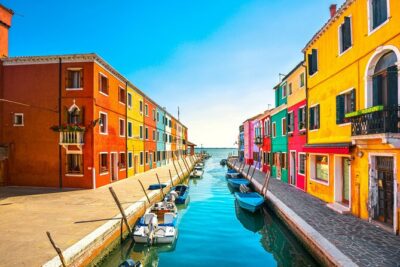
Boat Trip: Glimpse of Murano, Torcello & Burano Islands
Read our review →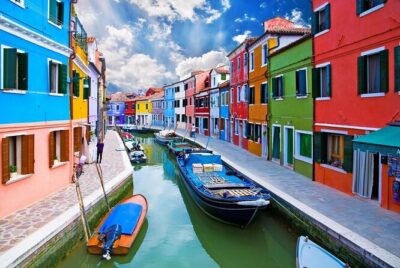
Murano & Burano: Boat Tour with Guide & Glass Factory Visit
Read our review →
Burano, Torcello & Murano Boat Tour w/Glassblowing
Read our review →Murano & Burano Islands Guided Small-Group Tour by Private Boat
Read our review →
Murano & Burano Panoramic Boat Tour w/ Glassblowing
Read our review →
Murano & Burano Guided Tour by Private Boat with Glassmaking
Read our review →
From Sardinia: La Maddalena Archipelago Full-Day Boat Tour
Read our review →Browse the lists this tour appears in