Review · ITALY
Padua to Venice Boat Cruise of the Brenta Riviera
Slow travel works beautifully here. This full-day cruise follows the old Burchiello route from Padua to Venice, passing grand villas, small towns, locks, and swing bridges along the Brenta Riviera. I especially like the three included villa visits and the chance to arrive at Venice by water instead of by train or road. The main drawback is the length of the day: villa visits can feel rushed, and the guide’s commentary, delivered in several languages, may be more detailed than some people want.
The cruise begins at Padua’s historic Burchiello Stairway and ends at San Marco, making it both a sightseeing tour and a useful one-way journey. I also like the changing scenery, from riverfront homes and countryside to the final approach across the Venetian Lagoon. Just remember that lunch and the return to Padua are not included.
Key points to know before booking
- Old Burchiello route: Follow the historic water connection between Padua and Venice, once served by elegant wooden riverboats.
- Three very different villas: Visit Villa Pisani, Villa Widmann, and Palladio’s Villa Foscari with admission and guided tours included.
- Five locks and nine swing bridges: The boat trip is about more than scenery. You watch the crew handle a working waterway.
- Arrival beside San Marco: The cruise docks at Riva degli Schiavoni, close to Venice water buses and central sights.
- Excellent multilingual guiding: Commentary is offered in English, French, German, and Italian, with guides such as Laura praised for clear, calm explanations.
- Plan for a long, active day: Large luggage requires advance booking, and the tour is not suitable for people with mobility impairments.
Why the Brenta Riviera is worth seeing by water
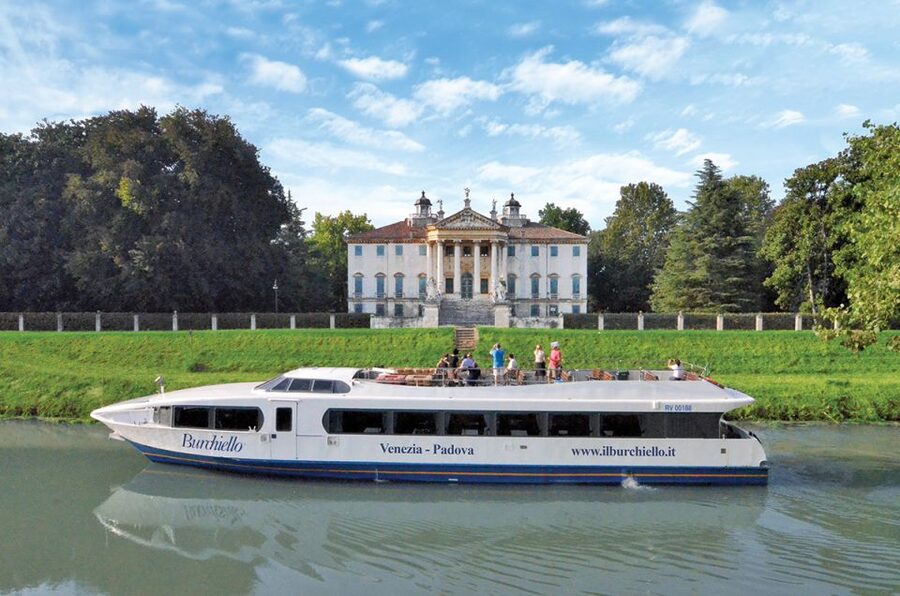
The Brenta Riviera is the river corridor between Padua and the Venetian Lagoon. Wealthy Venetian families built country villas here as summer residences, and many of them still line the water. From a road, you see only fragments. From the boat, the river itself becomes the route through the area.
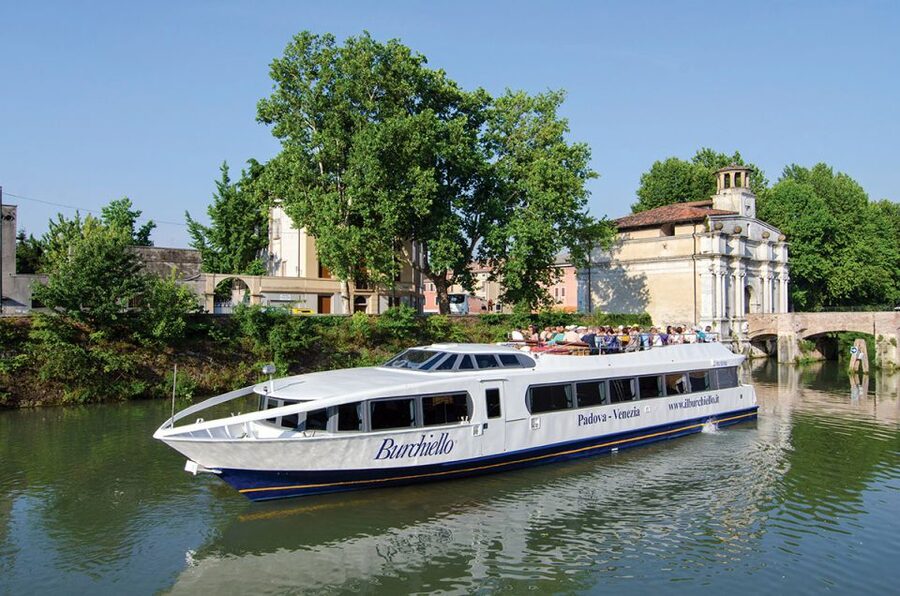
The journey recreates the course of the Burchiello, a traditional passenger boat that once connected Padua and Venice. These boats had wooden bodies, elegant cabins, balconies, and either sails or oars. On some parts of the route, horses helped pull them along the banks.
That history gives the cruise a clear purpose. You are not simply taking a scenic boat ride. You are using the old transport corridor that made it possible for Venetian nobles to move between the city and their country estates.
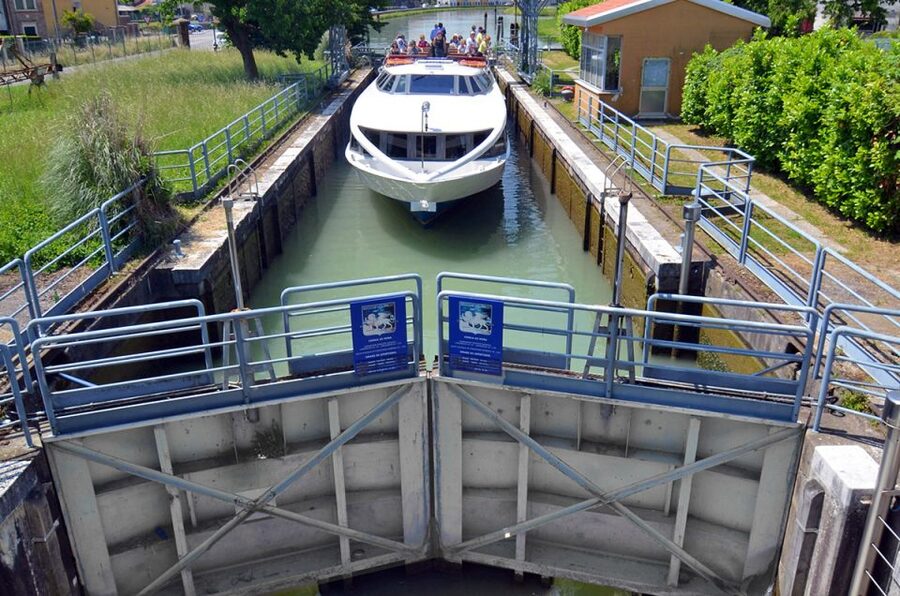
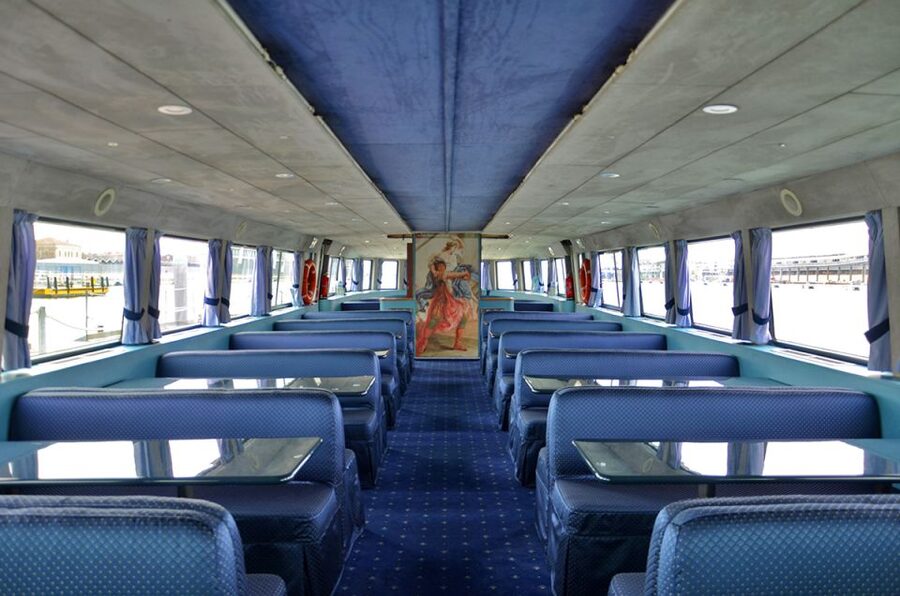
The boat has an open-air deck, which is the best place for views when conditions allow. You will need to move inside at times because some bridges are extremely low. Keep your head down and follow the crew’s instructions. One of the unusual pleasures of this route is watching the boat pass through five locks and under or around nine swing bridges.
A few more boat trips in Italy worth a look
- Boat Trip: Glimpse of Murano, Torcello & Burano Islands
★ 4.3 · 15,699 reviews - Murano & Burano: Boat Tour with Guide & Glass Factory Visit
★ 4.3 · 10,716 reviews - Venice: Burano, Torcello & Murano Boat Tour w/Glassblowing
★ 4.4 · 10,245 reviews
Starting at Padua’s Burchiello Stairway
The departure point is the Burchiello Stairway at Portello, in the historic heart of Padua. This is more than a convenient dock. Portello was part of Padua’s old river system, and the stairway recalls the days when boats carried people and goods along the water.
The exact departure time depends on the date, so check availability before booking. Since the cruise occupies the full day, arrive with enough time to find the dock and settle in. You should carry only what you need for the day.
Small backpacks, handbags, and cameras are allowed without a luggage reservation. Suitcases, trolleys, large travel bags, sports bags, and big backpacks must be booked in advance because storage space is limited. A standard piece can measure up to 75 by 50 by 30 centimeters, with a listed fee of €20. Larger luggage may count as two pieces. Undeclared luggage is accepted only if there is room, and the fee can be €30.
The storage area is inside the passenger cabin and is not guarded. Keep valuables with you.
Villa Giovanelli and the first stretch of river
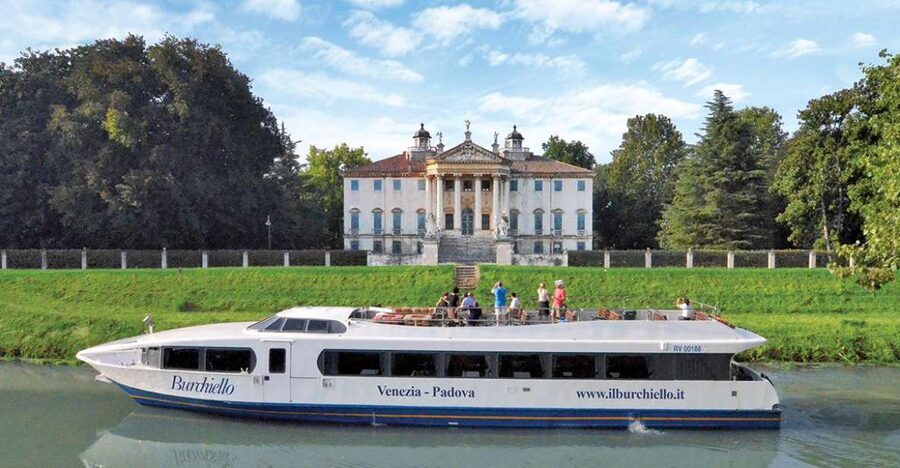
Soon after leaving Padua, the boat passes Villa Giovanelli at Noventa Padovana. You do not visit this villa, but it sets the tone for the route. From the river, you begin to see how these grand residences were positioned to face the water and receive arriving visitors.
The onboard guide provides illustrations and commentary about the villas along the banks. This is one of the strongest parts of the experience. The river moves slowly, so you have time to look, listen, and connect the buildings with the history of the waterway.
The commentary is given in English, French, German, and Italian. A multilingual format can make the narration last longer, but it also means the guide can serve a mixed group without splitting the experience. The best guides keep the pace calm and clear. Laura, in particular, was praised for delivering a large amount of information without making the day feel frantic.
Villa Pisani: the grand first stop
The first major stop is Stra, home to Villa Pisani. This is the largest and most imposing of the three villa visits, surrounded by a monumental park with a long pool and grand stables.
The villa’s frescoed rooms give you a direct look at the display and ceremony associated with an elite Venetian residence. The park provides a change of pace after time on the boat, and the long pool is one of the most memorable features of the grounds.
Your ticket and guided visit are included. Because this is a full-day route with several scheduled stops, you should not expect unlimited time to explore every room or corner of the park. The visit works best if you focus on the major interiors, the overall design, and the relationship between the house and its grounds.
Villa Pisani is a good introduction because it shows the grandest side of the Brenta villas. Later stops are smaller or more architecturally focused, so the three visits do not feel like repetitions of the same house.
Same coast, a different kind of day on the water:
- Murano & Burano Islands Guided Small-Group Tour by Private Boat
★ 4.5 · 7,580 reviews - Venice: Murano & Burano Panoramic Boat Tour w/ Glassblowing
★ 4.4 · 6,212 reviews - Murano & Burano Guided Tour by Private Boat with Glassmaking
★ 4.7 · 5,658 reviews - From Naples: Boat Tour of Amalfi, Positano and Ravello
★ 4.4 · 5,034 reviews
Locks, bridges, and the route to Dolo
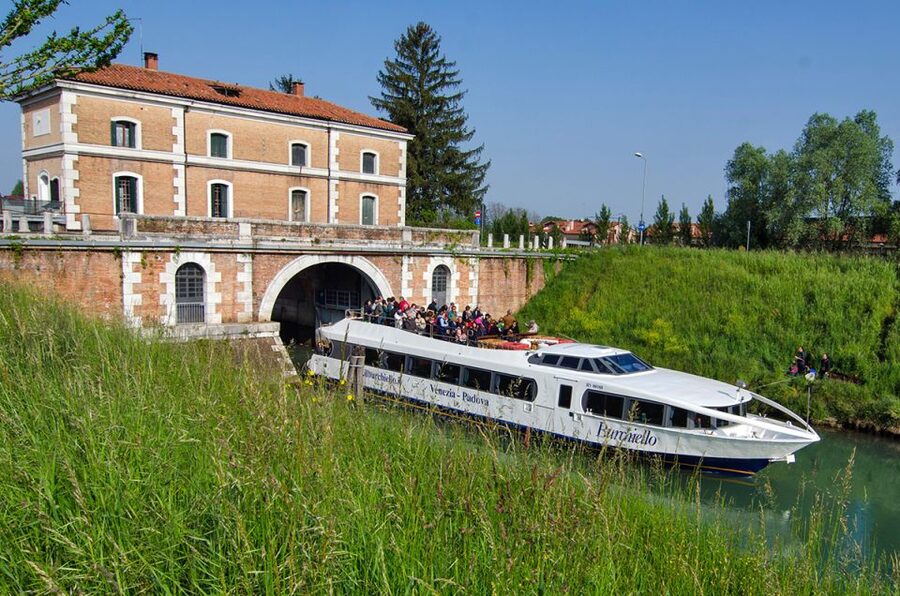
After Stra, the boat continues toward Dolo. The route passes through towns and countryside, with villa facades appearing along the riverbank. The scenery is not constant spectacle, and that is part of its appeal. You see ordinary river life between the grand residences.
At Dolo, the boat passes through the Dolo Lock. Locks are practical pieces of canal engineering, but they also turn the ride into a moving lesson. The boat enters a confined chamber, the water level changes, and the vessel continues at a different height.
Nine swing bridges add another memorable detail. Some are low enough that standing on the upper deck is unsafe as the boat passes beneath them. You may need to sit inside or on a lower level for parts of the route, so do not expect to stay outdoors all day.
The open deck is still worth using whenever it is safe. The river views are especially pleasant in the quieter stretches, and the boat gives you a better view of the banks than a coach would.
Villa Widmann and the Mira stop
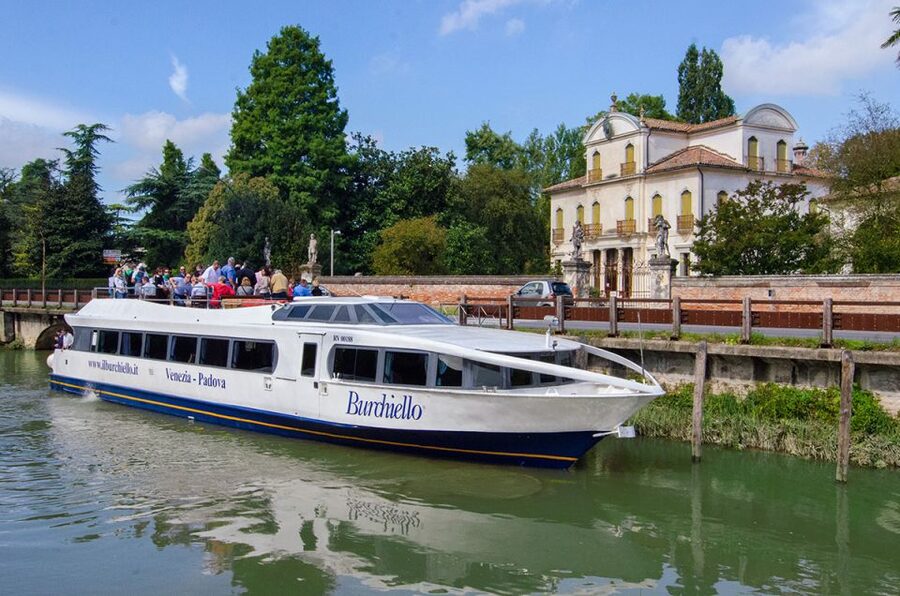
Just beyond the Mira Lock, the boat stops at Villa Widmann. This 18th-century mansion belonged to a noble family of Persian origin, giving the visit a different story from the grand Venetian residences at Villa Pisani and Villa Foscari.
The guided tour covers the house and its rooms, with the guide explaining the building’s owners and style. The villa helps show how the Brenta corridor was shaped by families with different backgrounds and ambitions, not only by one narrow Venetian tradition.
I like the balance of the three stops. Villa Pisani gives you scale and formal grandeur. Villa Widmann offers a more intimate mansion and a distinct family story. Villa Foscari brings the architectural importance of Andrea Palladio. If you have limited time in the Veneto, this trio gives you a useful range.
As with Villa Pisani, keep an eye on the schedule. One criticism of the day is that the villa visits can be short, especially at the final stop. You have enough time to see the main areas, but not necessarily to linger over every detail.
Lunch at Oriago
The boat continues to Oriago, where lunch is served at the historic Burchiello restaurant. Lunch is not included in the tour price, so budget separately for the meal.
This scheduled stop gives you a proper break from the boat and the villa visits. A meal at the route’s historic restaurant also fits the character of the day better than a quick snack eaten on deck. The food was described as delicious, but the overall price and menu are not specified, so check the current arrangements if you need to control costs closely.
The boat itself has refreshments, but the selection may be limited. Bring water and a small snack if you prefer to have something on hand. Keep it compact, since large bags are restricted and space is limited.
Villa Foscari, Palladio, and Malcontenta
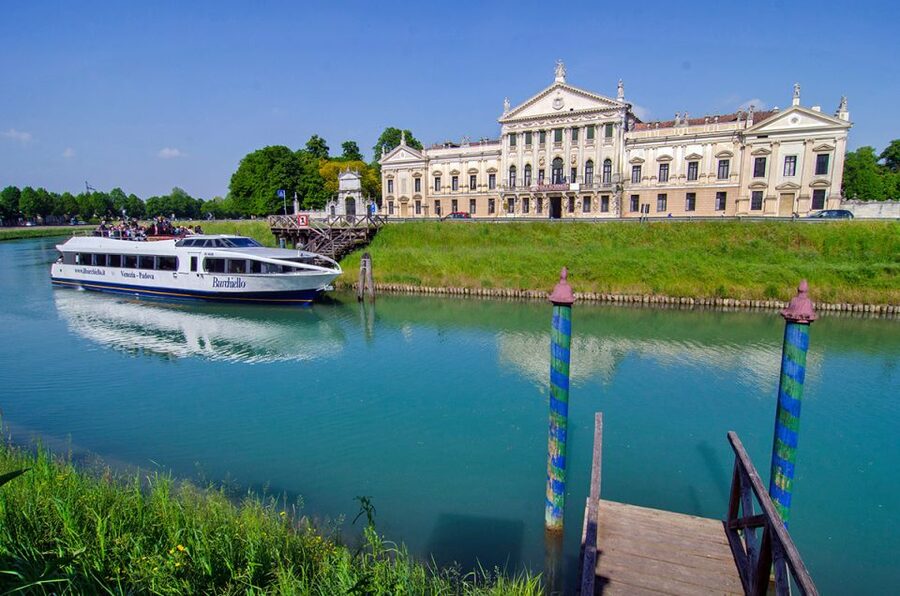
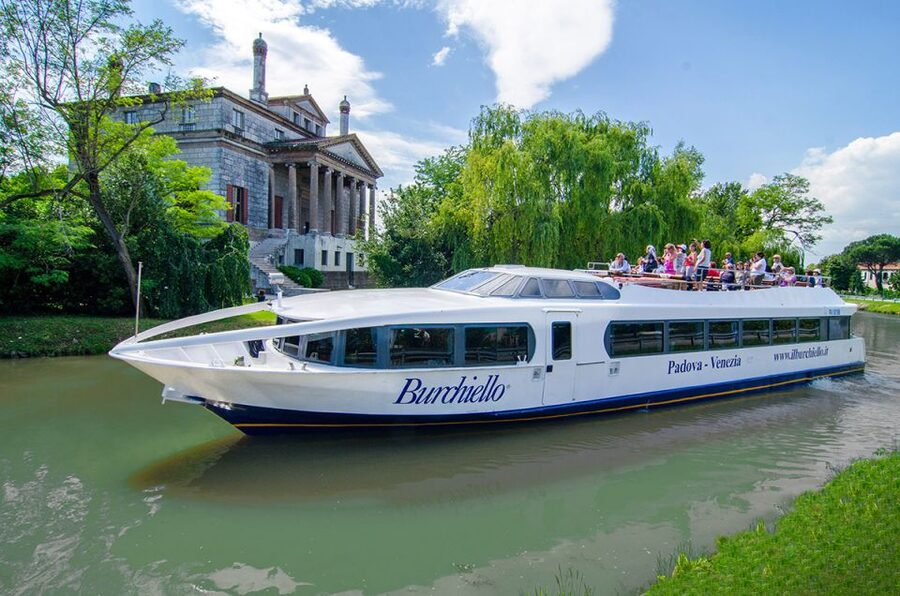
The final villa stop is at Malcontenta, where you visit Villa Foscari. Designed by Andrea Palladio, the villa is also a UNESCO World Heritage Site. Its position near the lagoon was practical as well as scenic, since the powerful Venetian owner could reach Venice easily from here.
This is the most architecturally important stop for many people. Palladio’s work is known for balance, proportion, and classical forms, and Villa Foscari gives you a chance to see those ideas in an actual Venetian country residence.
The tradeoff is time. The schedule can allow less than 30 minutes at this final villa, depending on the day’s progress. If Villa Foscari is your main reason for booking, understand that this is a guided glimpse rather than an unhurried architectural study.
After Malcontenta, the boat passes through the Moranzani Lock and heads across the lagoon. The character of the trip changes again. The narrow river gives way to wider water and the approach to Venice.
Arriving at San Marco by boat
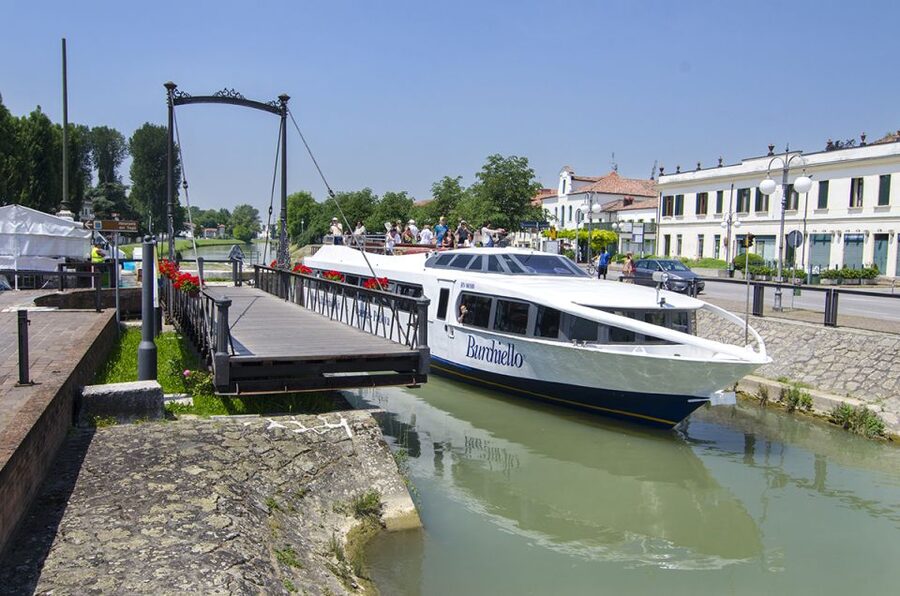
The final docking point is the Pontile della Pietà landing stage at Riva degli Schiavoni, near San Marco. This is one of the best features of the trip. Instead of arriving at a railway station or road terminal, you reach Venice from the water, with the city opening before you in the traditional way.
The landing stage is close to vaporetto stops, so it is a useful place to continue sightseeing or reach your accommodation. The guide can provide advice about Venice transport, including water buses and ticket options. Pay attention during the final briefing, especially if Venice is new to you.
The tour does not include transportation back to Padua. This is normally a one-way experience from Padua to Venice, so arrange your onward plans before you go. The stated route ends at San Marco, even though general booking information may describe the activity in relation to the original meeting point.
Is the $157.47 price good value?
At $157.47 per person, this is not a cheap boat ride. It becomes more reasonable when you add up what is included: the full river cruise, an onboard guide, admission to Villa Pisani, Villa Widmann, and Villa Foscari, plus guided visits at each villa.
You still need to pay for lunch, refreshments, and your onward transportation from Venice. Those extra costs matter if you are traveling on a strict budget.
For me, the value rests on the combination of transport and sightseeing. You are not spending a day on a boat and then paying separate entrance fees for three villas. The cruise connects the sights in a logical way, and the commentary explains what you are seeing as the river carries you from one stop to the next.
The value is strongest for people who enjoy history, architecture, and a slower pace. It is weaker if you want a fast transfer from Padua to Venice or prefer to explore each villa independently for as long as you like.
Who should book this cruise?
I would recommend it to you if you want an introduction to the Brenta Riviera without renting a car or arranging several separate visits. It suits people who enjoy guided history, grand houses, changing scenery, and unusual transport.
It is also a good choice if you are staying in Padua and want to reach Venice in a memorable way. The final approach across the lagoon gives the day a proper finish.
You should think twice if you dislike long excursions, multilingual commentary, scheduled meals, or short villa visits. The day includes a lot: a full river route, locks, bridges, three guided villa tours, lunch, and a lagoon crossing. That variety keeps the day interesting, but it also leaves little room for wandering at your own pace.
The tour is not suitable for people with mobility impairments. Boarding, moving around the boat, and visiting the villas require enough physical ease for a full day of scheduled activity.
Should you book the Padua to Venice boat cruise?
Book it if you want the journey itself to be the attraction. The Brenta Riviera is best understood slowly, and the boat lets you see the villas, locks, bridges, towns, and lagoon as one connected route.
I would choose this over a standard transfer if you have a full day and care about the Veneto beyond Venice’s central sights. Pack lightly, bring water, wear practical shoes, and accept that Villa Foscari and some other stops may feel brief.
If that sounds like your kind of day, the cruise offers strong value for its included villa entries and excellent guiding. If you mainly need to get from Padua to Venice quickly, take the train and spend your time elsewhere.
FAQ
Where does the boat cruise begin?
It begins at the Burchiello Stairway at Portello in Padua.
Where does the cruise end?
The route ends at the Pontile della Pietà landing stage at Riva degli Schiavoni, near San Marco in Venice.
Is transportation back to Padua included?
No. The return journey to Padua is not included.
Which villas are included in the tour?
The tour includes guided visits and entry to Villa Pisani, Villa Widmann, and Villa Foscari.
Is lunch included?
No. Lunch is not included, although the boat stops at the historic Burchiello restaurant in Oriago.
What languages are available?
The live guide service is available in English, French, German, and Italian.
How much luggage can I bring?
A piece of luggage can be up to 75 by 50 by 30 centimeters, but suitcases and other large bags must be reserved in advance. Small backpacks, handbags, and cameras do not need a reservation.
Can I bring a large bag without booking it?
Only if there is available space. Undeclared large luggage may be accepted for a €30 fee, while pre-booked luggage is listed at €20 per item.
Can I cancel the booking?
You can cancel up to 24 hours in advance for a full refund. A reserve-now, pay-later option is also available.
Just added in Italy
- Cinque Terre wonders Full Day Boat Tour★ 5.0 · 47 reviews
- Cinque Terre Pesto Making Class, Boat Tour and Lunch★ 4.5 · 46 reviews
- Private Island of Capri Boat Tour for Couples★ 4.5 · 142 reviews
- Private Island of Capri by Boat★ 4.5 · 298 reviews
- Capri Boat and Walking★ 4.5 · 112 reviews
- Private boat trip to Capri★ 5.0 · 41 reviews
- Boat Tour of the Caves on the Island of Capri★ 4.5 · 463 reviews
- Private Boat Tour of Capri★ 5.0 · 215 reviews
Italy Boat Trips, compared.
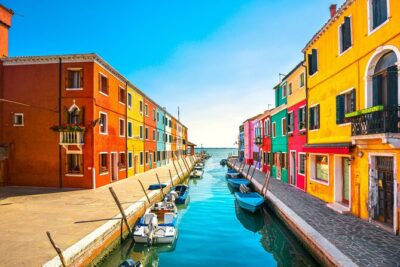
Boat Trip: Glimpse of Murano, Torcello & Burano Islands
Read our review →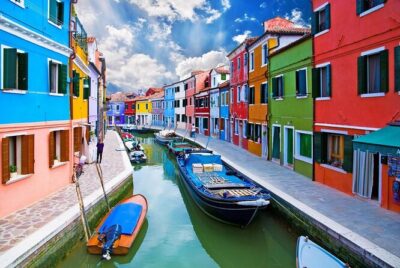
Murano & Burano: Boat Tour with Guide & Glass Factory Visit
Read our review →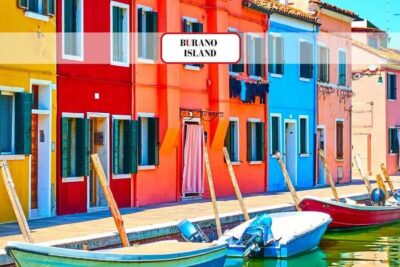
Burano, Torcello & Murano Boat Tour w/Glassblowing
Read our review →Murano & Burano Islands Guided Small-Group Tour by Private Boat
Read our review →
Murano & Burano Panoramic Boat Tour w/ Glassblowing
Read our review →
Murano & Burano Guided Tour by Private Boat with Glassmaking
Read our review →